
about Audio, High Fidelity
& Home Entertainment technologies
pid: 660-2026/10/07 (v1.2)
Privacy Policy
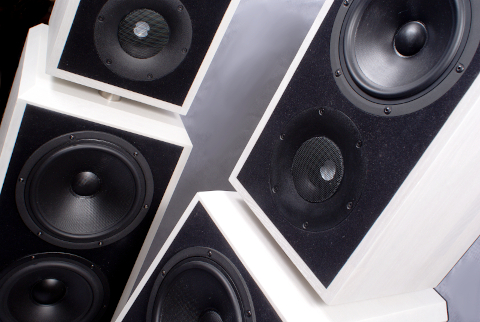
The Reference One replaced our reference loudspeakers (ATC SCM-50PSL) and was driven by a Parasound HCA3500 power amplifier. The rest of the system was the familiar setup we use regularly, with the WiiM Pro/Teac Esoteric D70 combination as the source and the Melos Plus Series Line as the preamplifier.
Setting up the loudspeaker involves mounting and connecting the head module, which is very straightforward and took only a few minutes. Alignment of the head module with the woofer cabinet is done visually, but the cabinet geometry is such that there is virtually no room for error. The connection cables and terminals are of very good quality. After that, the only thing left is to find the correct position in the room. This should initially be done without the spikes fitted, since the loudspeaker’s considerable weight makes positioning more difficult with them in place. The best approach is to install these at the end. In our listening room, the speakers were positioned approximately 2.5 meters apart and at roughly the same distance from the listening position, with the rear wall about half a meter back and the side walls approximately one meter away.
The first impressions created by the Reference One were extremely positive. The loudspeaker sounded fast and clear, with an excellent ability to reproduce rhythmic elements, a detailed and engaging midrange, smooth and relaxed highs, and a well-defined, disciplined stereo image. In fact, it seemed to possess all the qualities one expects from a genuinely top-level loudspeaker. The system filled the room easily, and the speaker never seemed to be working particularly hard. The sound was what we would call large and effortless, with not the slightest sense of compression, while playback levels could be very high and remained well controlled throughout.
)
)
Looking more closely, the Reference One proved exceptionally capable in the lower part of the audio spectrum. It has the extension, impact and scale needed to convey the details of recordings with substantial low-frequency content, but combines these qualities with excellent control. Together, they result in a neutral presentation without any exaggeration. The result is all the energy required for an imposing presentation without disturbing the overall tonal balance, and this provides the foundation for the accuracy that characterizes the loudspeaker as a whole.
The bass and lower midrange region is substantial and detailed, with excellent definition of both scale and temporal characteristics. Acoustic instruments, percussion and strings in particular, are reproduced with impressive realism and articulation; you can almost see them taking shape in the room. Rhythmic passages are characterized by a well-balanced combination of weight and transient speed, together with excellent body and fill, creating a genuinely positive sense of flow that makes it easy to become immersed in the music. The very good control can initially be interpreted as a certain stiffness, particularly during the first few hours of listening, but the truth is that the loudspeaker allows you to enjoy the actual content of the recording without adding energy or weight where none exists.
This behavior extends upward from the upper-bass region through the lower midrange and beyond, and it is largely responsible for the Reference One’s excellent midrange character. Here, I found a very strong sense of transparency, and the loudspeaker appeared to have exceptional layering capabilities, allowing it to describe large, complex, multi-layered works with considerable ease, even when the energy in this region is high. The presentation was vivid, rich in detail and, at the same time, relaxed, without becoming coarse, with a balanced degree of brightness and, ultimately, an extremely appealing character.
Solo and choral voices are reproduced naturally, with outstanding articulation and convincing timbre, together with a noticeable balance between male and female voices. Large-scale choirs and ensembles and full-size orchestras sounded imposing, with excellent positioning and movement description, while soloists occupied clearly defined positions within the soundstage, with plenty of air and very good dynamic expression. What you get in this region is exceptional resolving power, an absence of compression and, at the same time, a refined presentation that conceals nothing.
Speaking of resolving abilities, the Reference One is a loudspeaker with very good headroom in terms of both SPL and dynamics. It can make full use of a powerful amplifier and will reward the additional wattage by producing quite high levels without any sign of strain. I mentioned this in my initial impressions and will repeat it here because it is an important characteristic: it never gives you the impression that it is working hard or approaching its limits.
The loudspeaker reproduces the macro-dynamic profile of each recording with ease, and offers a dynamic contrasts that can be genuinely impressive. It is also very interesting that when you purposely try to approach its limits, this becomes apparent progressively and gently, further reinforcing the overall sense of refinement that the loudspeaker conveys.
At the top end, I confronted with good extension, transparency, and accurate reproduction of the temporal details. The loudspeaker sounded fast and incisive where required—for example, on the leading edges of percussion—but never excessive or fatiguing. Its tonal balance leans only slightly toward the smooth and gentle side without taking anything away from the music. I came away with the impression that the Reference One will make the most of an entire music collection, showing a certain tolerance for recordings that are hard or aggressive without becoming overly “musical” or sui generis. In my view, this is the ideal balance for a top-quality loudspeaker intended for domestic use.
The stereo image Reference One offers is clearly defined and firmly positioned in space, with a slight sense of intimacy and exceptional three-dimensionality. It is difficult to know whether the second tweeter plays a role here per se, but the soundstage was large and well disciplined, with convincing depth, excellent focus of individual sound objects, outstanding reproduction of the feeling of air and movement, and very good retrieval of low-level detail. With a well-recorded source, the result was genuinely impressive.
Conclusion
The Reference One is an impressive-looking, rationally designed and carefully voiced top quality loudspeaker, with all the characteristics associated with this approach: tonal balance, substantial low-frequency extension, a strong sense of neutrality, effortless dynamic reproduction and a detailed, imposing soundstage. The result is exactly what you would expect: exceptionally engaging sound without gimmicks or exaggeration, and a presentation that will respect both the record collection and the ears of a demanding listener. Kudos to Ren? Kellenberger on a very serious effort. You should definitely listen to it; it is a particularly interesting loudspeaker.
Previous | Next | More Reviews
The .gr Domain
